Rust Skin: Complete Guide to Skins
Rust Skin: Complete Guide to Skins, Buying, Trading and Using Them
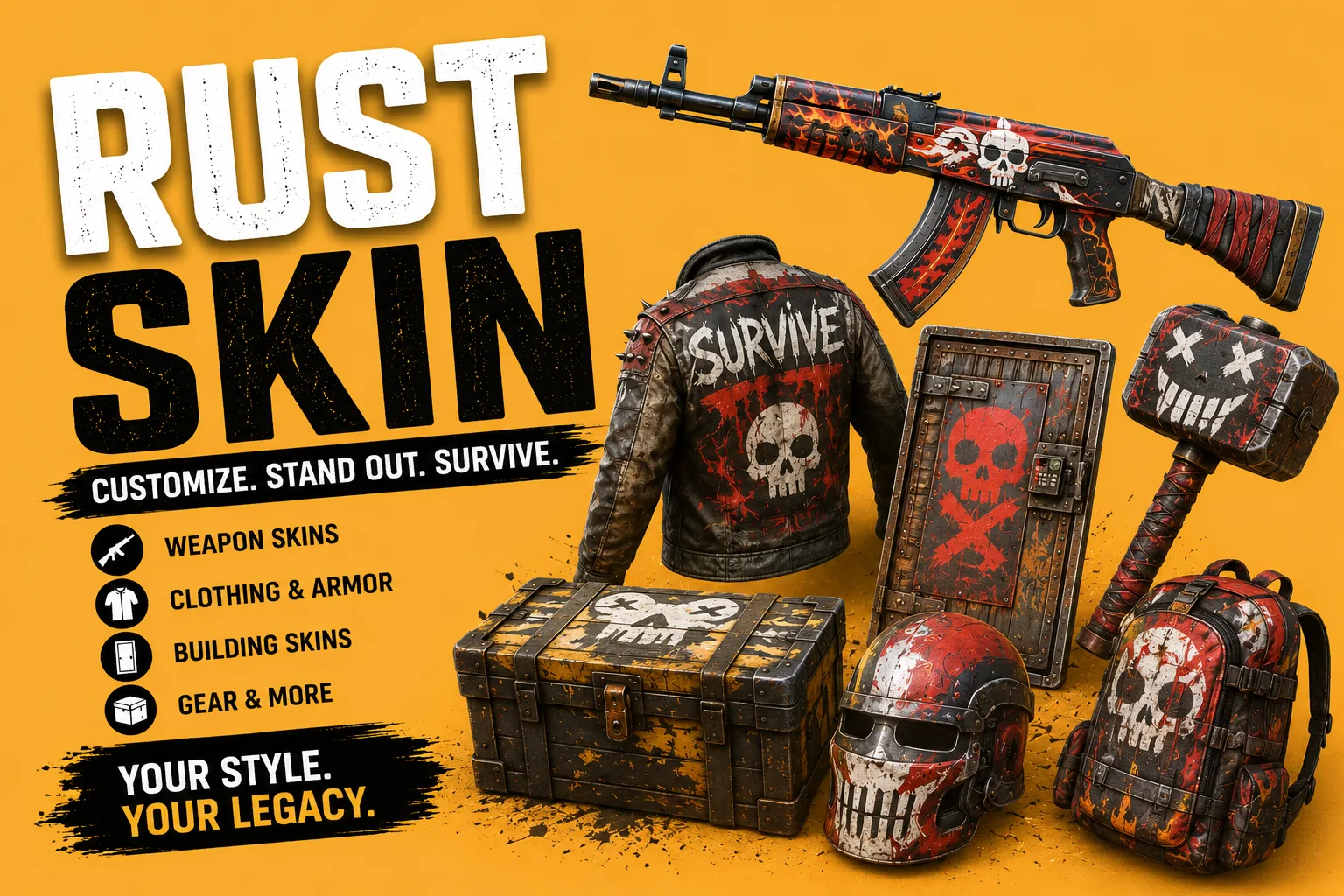
A Rust skin is one of the easiest ways to personalize your equipment in the Steam survival game without changing the basic identity of the item you use. Weapons, clothing, doors, tools, storage, deployables, and several building-related items can appear in completely different styles depending on the cosmetic content attached to your Steam account.
Some players collect skins because they want a consistent base theme. Others prefer bright weapon designs, recognizable armor sets, limited Twitch rewards, or older cosmetics they rarely see on a server. Whatever your reason, understanding where skins come from and how ownership works can prevent expensive mistakes.
This guide explains the main Rust skin systems, how to apply cosmetics, where players obtain them, what tradable and account-bound items mean, and what you should check before purchasing anything.
Quick Answer: What Is a Rust Skin?
A Rust skin changes the visual appearance of a compatible in-game item. For example, two players may craft the same weapon or door but use different skins, giving each version a different texture, color scheme, theme, or visual design.
Skins are generally connected to your Steam inventory or account ownership rather than being permanently attached to one character or server. If you own an eligible cosmetic, you can use it again across compatible Rust servers where the standard skin system is available.
The exact ownership and trading rules depend on the item. Some cosmetics are marketable and tradable, while certain packs, building skins, and special store items can remain permanently bound to the purchasing Steam account.
What Can Rust Skins Change?
Rust has cosmetic content for a wide range of objects. The selection changes as new items and collections are introduced, but players commonly encounter skins for:
- Assault rifles and other firearms
- Pistols, shotguns, and bows
- Hatchets, pickaxes, and tools
- Metal facemasks and chest armor
- Hoodies, pants, boots, and other clothing
- Sheet metal, garage, and armored doors
- Sleeping bags
- Storage boxes and lockers
- Furnaces and deployable objects
- Building materials and themed construction skins
This variety makes cosmetics useful for more than individual weapons. A player can build an entire visual theme around a compound, matching doors, storage, clothing, and equipment to the same style.
How Do You Get Rust Skins?
There is no single source for every cosmetic. Rust players can encounter skins through several official systems, and the availability of an individual item depends on how it was originally released.
Rust Item Store
The Rust Item Store on Steam sells current cosmetic items, packs, building skins, and other game content. The available selection changes over time, so an item visible during one period may not always remain featured in the same way.
Before purchasing, read the item's store information carefully. Steam identifies whether applicable items are tradable, marketable, or permanently connected to your account.
Steam Community Market
Eligible Rust inventory items can appear on the Steam Community Market when their market rules permit it. This allows players to purchase listed skins from other Steam users rather than waiting for an item to return to a current store rotation.
Market prices are controlled by supply and demand. A skin that once had a low original price can become more expensive if fewer copies are listed or player demand increases.
Twitch Drops
Rust regularly participates in Twitch Drop campaigns. During eligible events, players can connect Twitch and Steam, watch participating Rust creators, complete the required viewing time, and claim selected cosmetic rewards.
Drop campaigns are temporary. If you want a specific reward, check its event deadline and whether it requires a particular creator or any participating Rust stream.
Special Packs and Promotions
Some cosmetic content appears as part of larger Steam store packs, themed collections, charity releases, or special promotions. These items may follow different ownership rules from conventional marketable skins.
How to Use a Rust Skin
Once you own a compatible skin, there are usually two practical ways to use it: select the cosmetic while crafting the item or apply an eligible skin through the appropriate in-game interface, such as a Repair Bench.
Applying a Skin While Crafting
When crafting an item for which you own compatible cosmetics, choose the desired skin before completing the craft. The finished item will use the selected appearance.
Changing a Skin at a Repair Bench
Many eligible items can also have their appearance changed through a Repair Bench. This is useful when you already own the item and want to apply a different cosmetic without treating the existing appearance as permanent.
Availability can vary by item type, so check the interface rather than assuming every object supports the same skin-changing process.
Are Rust Skins Permanent?
Ownership of an acquired cosmetic generally remains associated with the relevant Steam account unless you trade, sell, or otherwise transfer an item that permits those actions.
This is different from the physical item you craft during a wipe. If someone kills you and takes your skinned weapon, you lose that particular crafted weapon, not the underlying cosmetic ownership recorded in your Steam inventory.
You can therefore craft another compatible item with the same owned skin later.
Server wipes also do not normally erase Steam inventory ownership. Your base and in-server equipment may disappear, but eligible cosmetics remain attached to your account.
Tradable Rust Skins vs. Account-Bound Items
One of the most important distinctions is whether an item can be transferred.
Tradable and Marketable Items
Some Rust skins can be traded between eligible Steam accounts and listed on the Steam Community Market. Newly purchased items may also have temporary restrictions before trading or market listing becomes available.
Account-Bound Content
Other Rust content is permanently connected to the purchasing Steam account. This is common with certain store packs, building skins, and special content.
An account-bound item should not be purchased with the expectation that you can later resell it.
Always check the current Steam description before buying. Do not rely on the rules of another skin because two visually similar items can have different ownership conditions.
What Are Rust Building Skins?
Building skins go beyond repainting a weapon. They allow compatible building sections to use alternative visual styles while remaining associated with the relevant construction tier or system.
These cosmetics can dramatically change how a compound looks. Instead of every base sharing the same visual material, players can create themed interiors and exteriors with styles designed around different architectural ideas.
Building skins are especially attractive to players who spend significant time designing bases, roleplay structures, shops, hotels, clan compounds, or creative community projects.
Because some building skin products are permanently bound to an account, check the store description before purchasing if resale value matters to you.
Do Rust Skins Give You an Advantage?
The primary purpose of a Rust skin is cosmetic customization, but visual design can still affect how players perceive an item or environment. Bright colors may make equipment easier to recognize, while darker or more complex designs can look different under particular lighting conditions.
Players sometimes debate whether certain cosmetic designs offer practical advantages because of visibility, glowing elements, storage organization, or unusual visual characteristics. These discussions can change as skins and game systems are updated.
The safest approach is to choose skins primarily because you like their appearance rather than purchasing them based on claims of a guaranteed competitive advantage.
How to Choose a Good Rust Skin
With thousands of designs circulating through the broader Rust ecosystem, buying randomly can become expensive. Decide what matters to you before opening the market.
Choose Skins for Items You Actually Use
A beautiful cosmetic has little practical value to your personal collection if you almost never craft the item it belongs to. Start with weapons, doors, armor, tools, and storage you regularly use.
Build Around a Theme
Some players prefer coordinated sets rather than unrelated cosmetics. Matching armor, weapons, doors, and storage can give a base and character a distinctive identity.
Check the In-Game Appearance
A small market thumbnail does not always communicate how an item looks during actual gameplay. Inspect additional images or trustworthy in-game previews when available.
Check Marketability Before Buying
If you care about reselling an item later, confirm that it is actually marketable. Never assume that every Rust cosmetic can be sold.
Set a Budget
Cosmetic collecting can become expensive surprisingly quickly. A collection of inexpensive purchases can cost more than one premium skin if you buy without tracking your total spending.
Are Expensive Rust Skins Better?
A higher market price does not automatically mean a skin is better for gameplay. Price can be influenced by age, scarcity, visual popularity, collection demand, availability, and how many owners are willing to sell.
One player may prefer a cheap, clean weapon design while another values a rare cosmetic because of its history or collection status.
If your goal is simply to make your equipment look better, there is no requirement to buy expensive skins. Rust has cosmetic options across many different price ranges.
Can Rust Skin Prices Change?
Yes. Prices on player-driven marketplaces can move over time because buyers and sellers decide what an item is worth at that moment.
Factors that can influence interest include:
- Scarcity
- Visual popularity
- Demand for a specific weapon or item
- New game updates
- Collector interest
- Similar skins entering the market
- Changes in available supply
Historical price movement does not guarantee future value. Buying skins purely as an investment adds risk because player preferences and market conditions can change.
Rust Workshop Skins Explained
Rust has an active community of artists creating cosmetic concepts and submitting work through the Steam Workshop ecosystem. Workshop submissions let players and creators showcase designs that may attract community attention.
A Workshop submission should not automatically be treated as an officially released, purchasable Rust skin. Community concepts and officially available inventory items are not the same thing.
This distinction is especially important when you see a skin in a screenshot or collection and cannot find it in the current Item Store or Community Market.
Rust Skins and Twitch Drops
Twitch Drops have become a recognizable part of the Rust community. Facepunch can run campaigns featuring streamers, events, and limited cosmetic rewards.
A typical Drop process involves:
- Connecting your Steam and Twitch accounts.
- Finding an active Rust Drops campaign.
- Watching an eligible live stream.
- Completing the required viewing time.
- Claiming the reward through Twitch.
- Receiving the eligible cosmetic on the connected Steam account.
Drop availability changes from campaign to campaign, so do not assume an older streamer skin is currently obtainable.
How Skins Can Help Organize a Rust Base
Cosmetics can be useful for visual organization even when their main purpose is appearance. Players with several storage skins can assign different designs to specific categories of loot.
For example:
- One storage style for weapons
- Another for building materials
- A distinctive box for medical supplies
- A separate appearance for components
- Matching doors for specific sections of a compound
In a large team base, visual consistency can save time when several players need ammunition, resources, or replacement kits during a raid defense.
For more Rust-focused guides, game resources, skin-related content, and community discoveries, visit Rustnecro.com.
Common Rust Skin Buying Mistakes
Assuming Every Skin Can Be Resold
Some cosmetics are permanently account-bound. Read the Steam listing before making a purchase.
Buying From Suspicious Websites
Skin communities attract phishing attempts and fake Steam login pages. Be extremely cautious with third-party links promising free cosmetics or unusually cheap items.
Buying Only Because a Skin Is Expensive
Market price is not a quality score. Choose cosmetics that suit the items you use and the visual style you prefer.
Ignoring Temporary Trade Restrictions
Eligible newly purchased market items may have temporary restrictions before they can be traded or listed again.
Confusing Workshop Concepts With Released Skins
A design appearing in the Workshop does not necessarily mean it is an officially available inventory item.
Frequently Asked Questions
What is a Rust skin?
A Rust skin is a cosmetic appearance for a compatible weapon, tool, clothing item, door, deployable, building element, or other in-game object.
Where can I buy Rust skins?
Officially available cosmetics can appear in the Rust Item Store on Steam, while eligible marketable items can also be listed on the Steam Community Market.
How do I equip a Rust skin?
Compatible skins can generally be selected when crafting an item, while many eligible existing items can have their appearance changed through a Repair Bench.
Do I lose my skin when I die?
You can lose the physical skinned item carried by your character, but ownership of the underlying eligible cosmetic remains associated with your Steam inventory or account.
Do Rust skins disappear after a wipe?
Server wipes remove server-side progression according to that server's rules, but they do not normally remove cosmetics you own through Steam.
Can every Rust skin be sold?
No. Some skins are tradable and marketable, while other content is permanently bound to the Steam account that owns it.
Can you get free Rust skins?
Twitch Drop campaigns can provide eligible cosmetic rewards without directly purchasing the individual skin, provided you meet the campaign requirements and properly connect your accounts.
Are Rust skins pay-to-win?
Rust skins are primarily cosmetic. Players may debate the visibility or convenience of individual designs, but you should not assume that purchasing a skin guarantees a competitive advantage.
Are Rust Workshop skins automatically added to the game?
No. The Workshop contains community-created submissions and concepts. A Workshop design should not be treated as an officially released skin unless it becomes available through an official Rust distribution system.
Final Thoughts
A Rust skin can be a small cosmetic change or the foundation of an entire visual identity for your character and base. Some players collect matching armor and weapons, others concentrate on doors and storage, and many simply use the free cosmetics they earn through Twitch campaigns.
The important part is understanding what you are buying. Check whether the item is tradable, marketable, or account-bound; confirm that it works with the item you actually use; and avoid treating market prices as guaranteed future value.
Good skins make Rust feel more personal. They do not replace strong base design, efficient farming, good aim, or smart decision-making—but they can make the equipment you lose during the next raid look much better on the way out.