Rust Game: A Complete Beginner’s Guide to Survival
Rust Game: A Complete Beginner’s Guide to Survival
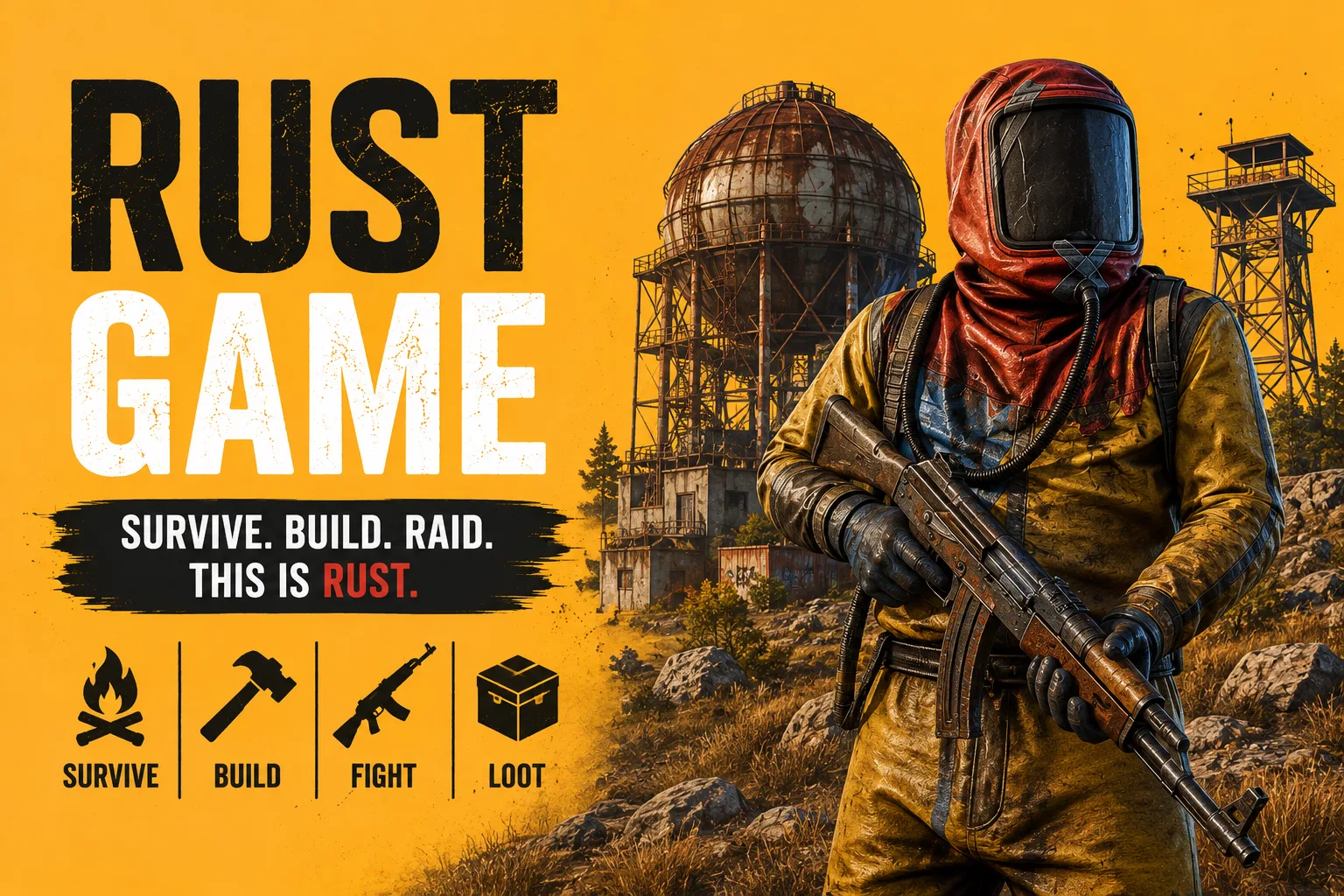
The Rust game is a multiplayer survival experience built around one simple objective: stay alive. That goal may sound straightforward, but survival quickly becomes complicated when hunger, cold, wildlife, radiation, hostile players, and limited resources all compete for your attention.
Every server creates a different story. You may spend one session quietly gathering materials and expanding a small base, then lose everything during a raid the following night. You may meet a friendly stranger, join a powerful group, become a successful trader, or discover that the player you trusted has emptied your storage.
This guide explains the core Rust gameplay loop, the safest way to begin, how progression works, and which mistakes new players should avoid.
Quick Answer: What Is the Rust Game?
Rust is an online survival game in which players gather resources, craft equipment, build bases, explore monuments, and compete or cooperate with other survivors. There is no fixed campaign that tells every player what to do. Your goals depend on the server, your available resources, your teammates, and the risks you are willing to take.
A typical Rust session includes:
- Collecting wood, stone, metal, food, and components
- Crafting tools, weapons, clothing, and medical supplies
- Building and upgrading a protected base
- Exploring roads, monuments, tunnels, and abandoned locations
- Researching useful items and unlocking blueprints
- Fighting, trading, negotiating, or cooperating with other players
- Defending your base against raids
How Does a New Rust Adventure Begin?
A new life usually begins on a beach with only basic equipment. At this stage, even a small amount of wood, stone, food, or cloth can determine whether you survive long enough to create a base.
Your first objective should not be finding the strongest weapon. It should be establishing a safe location where you can store resources and respawn after death.
Follow this early-game order:
- Move away from crowded spawn beaches.
- Collect enough wood and stone for basic tools.
- Gather cloth for a sleeping bag.
- Find food and maintain your health.
- Choose a practical base location.
- Build a small starter base with secure doors.
- Place storage and begin collecting materials for upgrades.
Do not carry every resource you own while exploring. Deposit valuable materials regularly. A small successful trip is better than losing a full inventory because you stayed outside too long.
Choosing the Right Rust Server
Your server choice has a major effect on difficulty. A new player joining a highly populated competitive server may encounter experienced groups, established compounds, and frequent combat before learning the basic controls.
Official Servers
Official servers usually offer a straightforward version of the standard experience. They can be competitive and may attract players who already understand progression, building, and raiding.
Community Servers
Community servers may have active administrators, specific group limits, custom rules, or a stronger focus on solo and small-team gameplay. They can be a useful choice for players who want a more controlled environment.
Modded Servers
Modded servers can change gathering rates, loot availability, team sizes, building rules, and other systems. Faster progression makes it easier to practice building and combat, although it may not reflect the pace of a standard server.
Beginners should look for a recently wiped server with manageable population, clear rules, active moderation, and a team limit that matches their play style.
Understanding Rust Server Wipes
Rust servers periodically reset part or all of their progress. This process is known as a wipe. A map wipe removes player-built structures and resets the world, allowing everyone to begin building again.
Some servers may also reset learned blueprints according to their own schedule. Because wipe rules vary, read the server description before joining.
Wipes are an important part of the Rust experience. They prevent one group from controlling the same map forever and create fresh opportunities for new alliances, rivalries, and base locations.
The beginning of a wipe is usually more active. Resources are heavily contested, starter locations fill quickly, and even basic equipment can create a significant advantage.
How to Choose a Good Base Location
A good location balances access to resources with protection from other players. Building directly beside a valuable monument may shorten farming trips, but it can also expose your base to constant traffic.
Before placing a foundation, consider:
- Nearby stone, metal, wood, and food sources
- Distance from roads and useful monuments
- Visibility from hills, cliffs, and open fields
- The number of established bases in the area
- Access to roads, rivers, coastlines, or transport routes
- The safest direction for future expansion
A hidden location is not automatically secure. Experienced players search forests, rock formations, coastlines, and remote valleys for smaller bases. Strong construction and careful resource management are still necessary.
Building Your First Secure Base
Your first base should be small, affordable, and easy to defend. New players often build large structures before collecting enough materials to upgrade or maintain them. This creates a visible target with weak walls and unnecessary upkeep.
Start with a compact design that includes:
- A secure entrance with more than one door
- A Tool Cupboard placed in a protected position
- At least one sleeping bag
- Organized storage boxes
- A furnace for processing ore
- Enough space for essential crafting stations
An airlock is one of the most useful early improvements. It creates a small entrance area between two doors, reducing the chance that another player can enter the entire base when the outer door opens.
Protect the Tool Cupboard
The Tool Cupboard controls building authorization and supports base upkeep. Keep it locked, protected, and supplied with the materials required by your building grades.
Check its upkeep timer before leaving the server. A strong-looking base can still begin decaying when the necessary resources run out.
Gathering Resources Efficiently
Efficient farming is not about collecting the largest possible inventory. It is about gathering what your current objective requires and returning safely.
Wood
Wood is essential during early progression. It supports basic construction, tools, furnaces, storage, and many craftable items. Avoid spending all of it on an oversized starter base.
Stone
Stone helps improve basic structures and is commonly used for stronger early-game building sections. Upgrading vulnerable walls quickly can make a starter base less attractive to opportunistic attackers.
Metal Ore
Metal Ore can be processed into Metal Fragments, which are needed for many tools, weapons, doors, building upgrades, and other useful items.
High Quality Metal
High Quality Metal is more valuable and should be stored carefully. Spend it on equipment, components, and important upgrades that provide a clear advantage.
Scrap and Components
Roads, monuments, containers, and industrial areas can provide components and Scrap. These resources support crafting, research, and progression through the technology system.
How Progression Works in Rust
Rust progression is not limited to finding better weapons. It involves improving your base, expanding storage, processing resources, unlocking blueprints, securing reliable farming routes, and preparing replacement equipment.
A practical progression path looks like this:
- Establish a sleeping bag and starter shelter.
- Upgrade the most vulnerable building sections.
- Collect Scrap and useful components.
- Build the workbenches required for advanced crafting.
- Research essential weapons, ammunition, medical items, and doors.
- Create several ready-to-use equipment sets.
- Expand only when you can support the additional upkeep.
- Prepare defenses before attracting attention with a large compound.
Progress is rarely perfect. You may lose equipment, fail at a monument, or return to find your base damaged. Successful players recover quickly instead of expecting every trip to produce a profit.
Combat and Player Encounters
Not every player encounter needs to end in combat, but assuming that every stranger is harmless is equally dangerous. Keep distance, use cover, and avoid revealing the location of your base unnecessarily.
During combat:
- Use terrain, walls, rocks, and buildings as cover.
- Avoid standing still while checking your inventory.
- Carry medical supplies in an accessible position.
- Listen for footsteps, doors, gunfire, and nearby activity.
- Do not chase an injured player into an obvious ambush.
- Leave the area when the risk becomes greater than the reward.
Positioning and awareness are often more important than equipment quality. A well-armed player crossing an open field can still lose to someone using cover and surprise effectively.
Solo Play vs. Team Play
Playing Solo
Solo players control every decision but must gather, build, defend, and organize everything alone. Small bases, hidden storage, efficient routes, and careful fights are especially important.
Playing with a Team
Teams can divide responsibilities between farming, building, monument runs, crafting, and defense. However, larger groups require more equipment, more resources, and better communication.
Trust is another major consideration. Only give base codes and access to players you know well. One careless invitation can compromise an entire compound.
How Raiding Changes the Game
Raiding allows players to break into bases and take stored resources. It is one of the most dramatic parts of Rust because the result can represent hours or days of preparation.
Before attempting a raid, gather information. Estimate the number of doors, identify possible loot rooms, watch for defenders, prepare an escape route, and decide how much equipment you are willing to lose.
Defenders should avoid placing every valuable item in one obvious room. Split critical resources between protected areas and keep emergency equipment available for rapid recovery.
More Rust-focused guides, community content, and game-related discoveries can be found at Rustly.gg.
Common Rust Beginner Mistakes
Building Too Large Too Early
Large bases require more resources, attract attention, and create higher upkeep costs. Build only what you can protect and maintain.
Carrying Every Valuable Item
Deposit resources between trips. One death should not remove all of your progress.
Ignoring the Tool Cupboard
Keep it locked, protected, and supplied. Losing building control can make base recovery much harder.
Opening Doors Carelessly
Listen before leaving and use an airlock. Door campers may wait outside for an opportunity to enter.
Trusting Strangers Too Quickly
Cooperation can be valuable, but do not immediately reveal codes, storage locations, or your full base layout.
Taking Every Fight
Survival sometimes requires retreat. Avoid risking an important inventory for a fight with no meaningful reward.
Frequently Asked Questions
Is the Rust game difficult for beginners?
Rust can be difficult because it combines survival systems, building, combat, progression, and unpredictable player behavior. Beginner-friendly community servers can make the learning process more manageable.
Can Rust be played solo?
Yes. Solo play is possible, but it requires efficient resource management, careful base design, and selective combat. Solo-only or limited-group servers may provide a more balanced experience.
Does Rust have a single-player story mode?
Rust is primarily designed around multiplayer survival rather than a traditional story campaign. Most memorable stories emerge from player decisions and server events.
What should a beginner do first in Rust?
Leave the spawn area, gather basic resources, craft a sleeping bag, obtain food, and build a small secure base before taking major risks.
Why does my Rust base decay?
Bases decay when their Tool Cupboard does not contain enough upkeep materials or when parts of the structure are not properly protected by the relevant building authorization area.
What is the best Rust server for a new player?
Look for a server with moderate population, active administrators, clear rules, and solo or small-team limits. A lower-pressure environment provides more time to learn building and progression.
Is Rust only about fighting?
No. Players can focus on building, farming, trading, electricity, exploration, transport, roleplay, or community interaction. Combat is important, but it is only one part of the sandbox.
Final Thoughts
The Rust game is most rewarding when you stop treating every loss as failure. Bases are raided, equipment disappears, alliances collapse, and servers eventually reset. The challenge is learning how to rebuild more efficiently each time.
Begin with a small base, gather only what you need, protect your Tool Cupboard, deposit resources regularly, and choose fights carefully. As your knowledge improves, progression becomes faster and setbacks become easier to manage.
Rust is not only about surviving one night. It is about adapting to a world where every player can change your plans.